
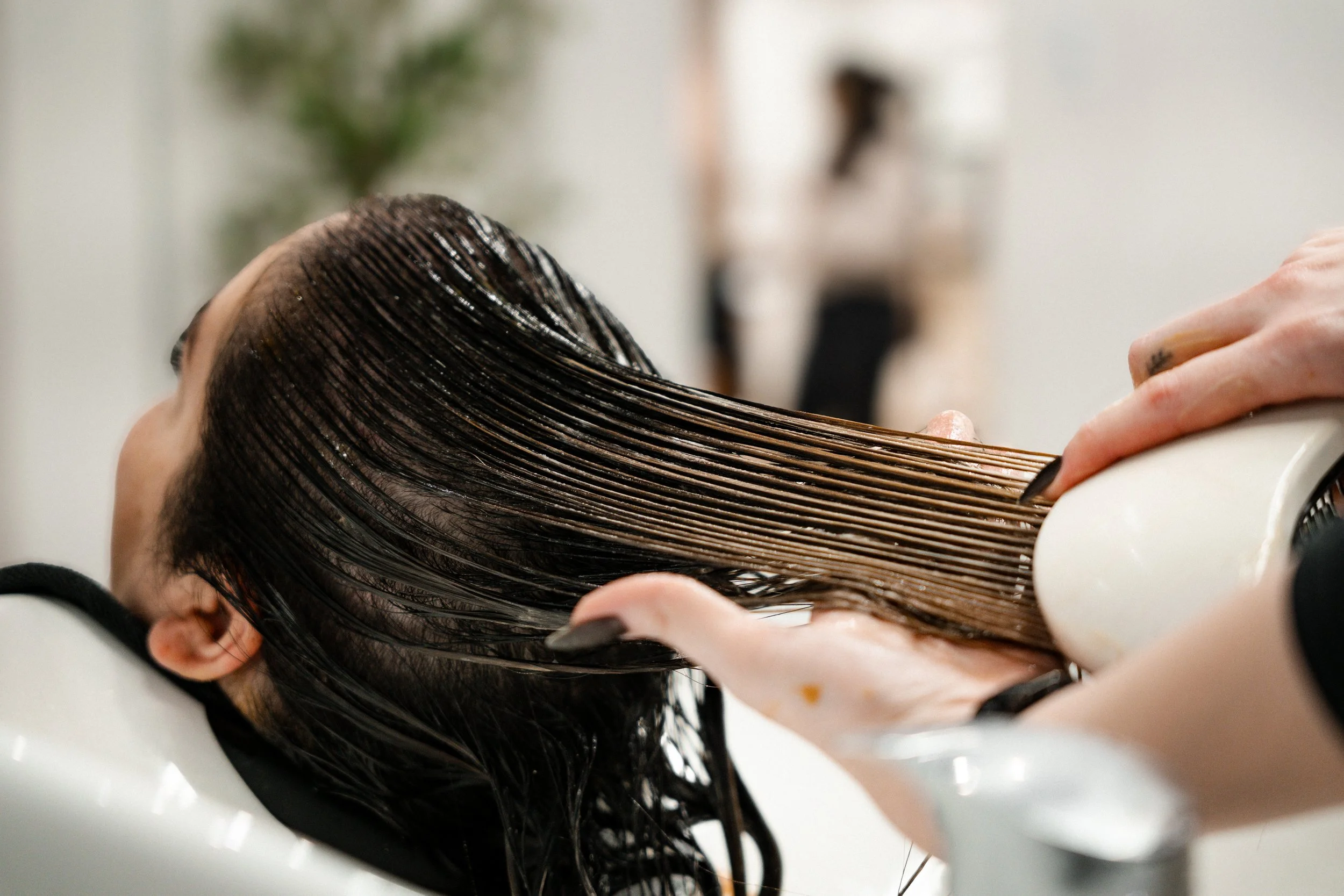
These two get used interchangeably at front desks all over the country, and they are not the same service. Reserving the wrong one is how people end up paying for an appointment that did not fix what was bothering them.
The short answer: toner changes tone. Gloss adds shine and refreshes what is already there. If your blonde has gone warm or brassy, you need a toner. If your color is the right tone but looks dull and flat, you need a gloss.
Both sit inside our color work, and both are quick appointments compared with a full color service.
What a toner does
A toner deposits pigment to neutralise a tone you do not want. Purple and blue-based toners cancel yellow and orange in lightened hair. A toner can also cool a blonde down, warm it up, or knock back the brightness of a lift that came out hotter than intended.
Toner is the service that finishes almost every blonding appointment, because lifting hair always exposes underlying warmth. If your blonde looked perfect leaving the salon and yellow six weeks later, the toner has worn off, not the lightening.
Toners typically hold four to six weeks depending on how often you wash and how much sun and heat the hair gets. Blonding guests in Amarillo tend to sit at the shorter end of that, because the sun here is not gentle.
What a gloss does
A gloss is a semi-permanent, low or no-ammonia treatment that seals the cuticle and adds shine. It can be clear or tinted. Clear gloss is pure shine and smoothing with no color change. Tinted gloss refreshes the depth or tone you already have.
A gloss makes color look expensive again, which is genuinely what most people are describing when they say their hair looks "dull." It also improves how light reflects off the hair, so the same color reads richer without being redone.
Glosses usually last four to six weeks too, and they fade evenly rather than shifting tone, so there is no awkward in-between stage.
Which one do you actually need?
Your blonde has gone yellow, orange or brassy. Toner. There is more on preventing it between visits in our guide to stopping blonde from going brassy.
Your color is the right shade but looks flat and matte. Gloss, clear or tinted.
Your brunette has lost its depth and richness. Tinted gloss.
Your grey coverage has faded but your roots are not through yet. Tinted gloss will buy you a few more weeks.
Your color has gone patchy or banded. Neither on its own. That is a correction conversation, not a refresh.
You have an event in three days and your color is six weeks old. Gloss. It is the highest-impact hour you can spend on your hair.
Plenty of appointments include both. Toner to correct the tone, gloss to seal and shine it. Your stylist will tell you which your hair needs when she looks at it, and it is a short conversation rather than a sales pitch.
If your color is not doing what it did in month one, this is the appointment to reserve rather than a whole new color. Become a WHITEFOX Guest and we will refresh what you already paid for.
What about a glaze?
Glaze and gloss are used to mean the same thing in most salons, and in ours they do. If a stylist anywhere distinguishes them, she usually means glaze as the more superficial, shorter-lived version. Ask what is included rather than relying on the word.
Where this sits in a blonding schedule

If you are a blonding guest, the pattern that works is a full lightening service every ten to sixteen weeks with a toner or gloss in between. That is how you keep the color looking new without lifting the hair more often than it can take, and it is how we build most blonding plans.
The at-home half matters as much. A tone-supporting shampoo, real thermal protection, and less frequent washing than you think you need will stretch a toner by weeks. Our Davines line is what we use and sell for this, and there is a fuller routine in our piece on maintaining color between salon visits.
Skip the fading, damage, and guesswork.
Frequently asked questions
What is the difference between a toner and a gloss? A toner deposits pigment to correct or change tone, usually neutralising yellow or orange in lightened hair. A gloss seals the cuticle to add shine and can refresh the tone you already have. Toner fixes color, gloss revives it.
How long does a hair gloss last? About four to six weeks, depending on how often you wash and how much heat and sun your hair gets. Glosses fade evenly rather than shifting tone.
Is a gloss damaging? No. Glosses are semi-permanent with little or no ammonia and no lifting involved, so they deposit rather than break down the hair. Most guests find their hair feels smoother afterwards.
Can a gloss cover grey? It can blend and soften grey and add coverage to hair that is already colored, but it will not give full opaque coverage on its own. For that you need a permanent color or a gray blending service.
Do I need a toner every time I get highlights? Almost always, yes. Lifting hair exposes underlying warmth, and toner is what neutralises it. If your blonde turned yellow weeks after a highlight, the toner faded rather than the highlight.
Which is cheaper, toner or gloss? They are comparable, and both are considerably less than a full color service. Current color ranges are published on our pricing page and your stylist will quote you at the consultation.
Your color does not need redoing as often as you think. It usually needs refreshing. When it is time, reserve a color refresh or call us at (806) 236-6047 and we will tell you honestly which service your hair is asking for.
