
Hair extensions for fine or thin hair: what actually works
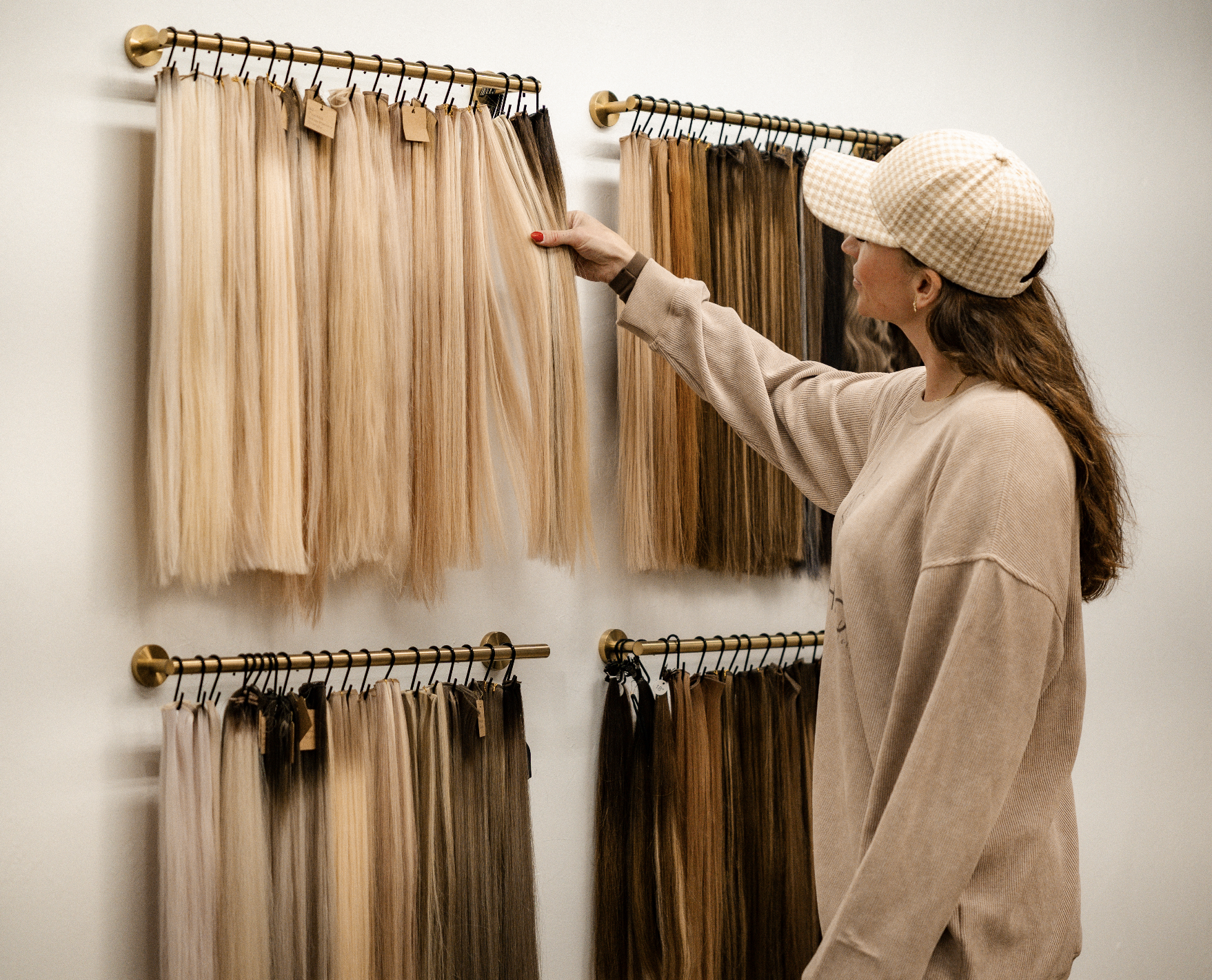
If your hair is fine or thinning, you have probably been told extensions are not for you, or you have quietly worried they will slip, show through, or damage what you already have. The honest answer is that extensions absolutely can work on fine and thin hair, but only with the right method and an installer who understands the difference. The wrong approach on delicate hair does real harm. The right one gives you fullness that looks completely natural. This is a conversation we have often in our extensions chair at WHITEFOX, because so many fine-haired women have been turned away or burned before.
Here is the short version. Fine hair needs lightweight, evenly distributed extensions placed by someone who respects how much weight your hair can actually carry. Method matters more than anything else.
Why fine hair needs a different approach
Fine and thin are not the same thing, and the distinction matters. Fine describes the width of each strand. Thin describes how many strands you have. Plenty of women are both, and both conditions mean the hair can carry less weight and hides less, so a poorly chosen extension shows or pulls.
The two real risks on delicate hair are visibility and tension. If the attachment is bulky, it shows through sparse hair. If it is too heavy or placed in the wrong spot, the weight drags on the follicle and can cause traction damage over time. Good extension work on fine hair is really an exercise in restraint: less weight, smaller sections, smarter placement.
The methods that work best on fine hair
Not every extension type suits delicate hair. A few guidelines we follow:
Hand-tied wefts, applied lightly. A skilled installer uses fewer rows and lighter wefts on fine hair, lying flat against the scalp so they stay hidden. Done right, this is usually the most comfortable and natural-looking option for fine hair.
Tape-ins can suit very fine hair, because the tabs are thin and lie flat, which hides well when there is not much hair to cover them. The trade-off is more frequent maintenance.
Avoid heavy single-attachment methods and anything that concentrates a lot of weight on one point. On fine hair that is where tension damage starts.
There is no single best method for everyone. The right one depends on how fine, how thin, your lifestyle, and your goals, which is why we match the method to the head rather than selling one type to everybody. Our guide comparing hair extension types breaks down how each one behaves.
Will extensions damage thin hair?
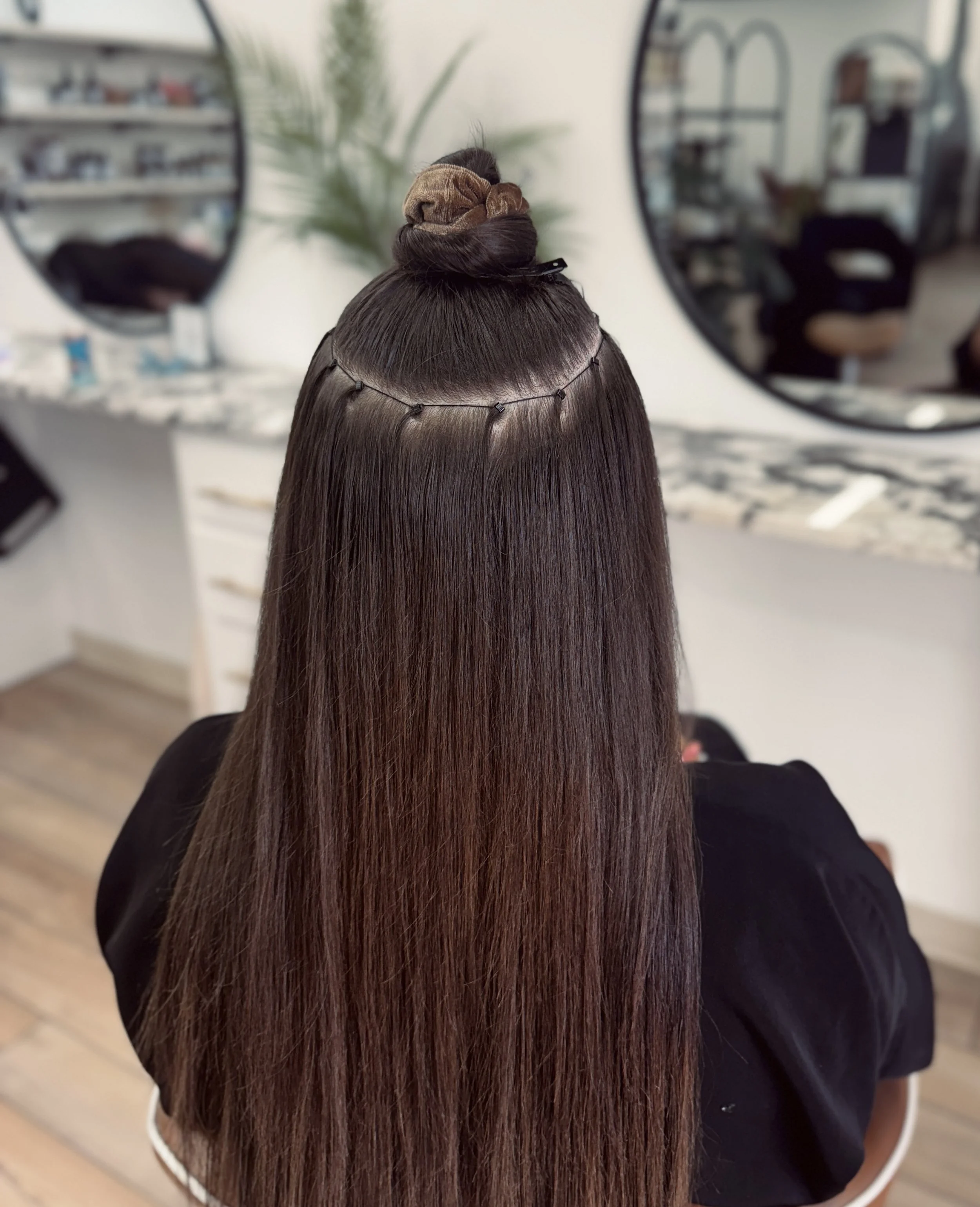
This is the fear, and it is a fair one. Extensions damage hair when they are too heavy for what is underneath, installed too tightly, or left in too long without a move-up. None of those are inevitable. They are installer decisions.
We protect fine hair by keeping the weight appropriate, distributing it across the head instead of loading one area, checking tension at the scalp, and holding you to a proper move-up schedule so grown-out wefts never start to pull. We would also rather tell you honestly that your hair needs a health reset before extensions than install on compromised hair and watch it suffer. Being candid about that is part of the job.
When extensions are not the answer
Sometimes the more honest recommendation is not extensions at all. If your thinning is significant, driven by a medical or hormonal cause, or concentrated at the crown or part where extensions cannot safely add coverage, extensions can disappoint or even make things look sparser. In those cases a different solution serves you better.
That is where our hair replacement and thinning-hair work comes in, including toppers and non-surgical systems designed specifically for meaningful hair loss rather than added length. There is no ego in this for us. The right call is whatever actually solves your situation, and a consultation is where we figure out which side of that line you are on.
What to expect at your consultation
A fine-hair extension consultation starts with a real look at your hair: how fine, how thin, where it is sparse, the condition of the strands, and your scalp. We talk about your lifestyle and your goals, then recommend the method and the amount of hair that will look natural and stay safe on your hair specifically. If extensions are right, we design the placement around your fullness. If they are not, we tell you and point you to what is. You leave with an honest plan either way, which is the whole point of how we work.
Frequently asked questions
Can I wear extensions if my hair is fine or thin? Usually yes. Fine and thin hair can carry extensions beautifully when the method is lightweight, the wefts are placed to lie flat and stay hidden, and the weight is distributed evenly. The key is an installer who adjusts for delicate hair rather than using a one-size approach.
What is the best extension method for fine hair? Lightly applied hand-tied wefts are often the most natural and comfortable option, and thin tape-ins can suit very fine hair because they lie flat. The right choice depends on your hair and lifestyle, which a consultation confirms.
Will extensions damage my thin hair? They can if they are too heavy, installed too tightly, or left in too long. They do not have to. We keep the weight appropriate, distribute it, check tension, and keep you on a move-up schedule so your own hair stays protected.
How do I know if I should get extensions or hair replacement instead? If you want added length and fullness and your hair is healthy enough to carry weight, extensions are likely a fit. If you have significant thinning, especially at the crown or part, a topper or non-surgical system may serve you better. We assess which is right at your consultation.
Will people be able to tell I am wearing extensions? Not when they are matched and placed correctly on fine hair. The wefts lie flat against the scalp, the color and texture are custom-matched, and the amount is kept natural, so the result reads as your own fuller hair.
Fine hair does not mean you are stuck with the fullness you have. When you are ready for an honest look at what will actually work for your hair, become a WHITEFOX Guest or call us at (806) 236-6047.
