
Gray blending: a modern alternative to full coverage
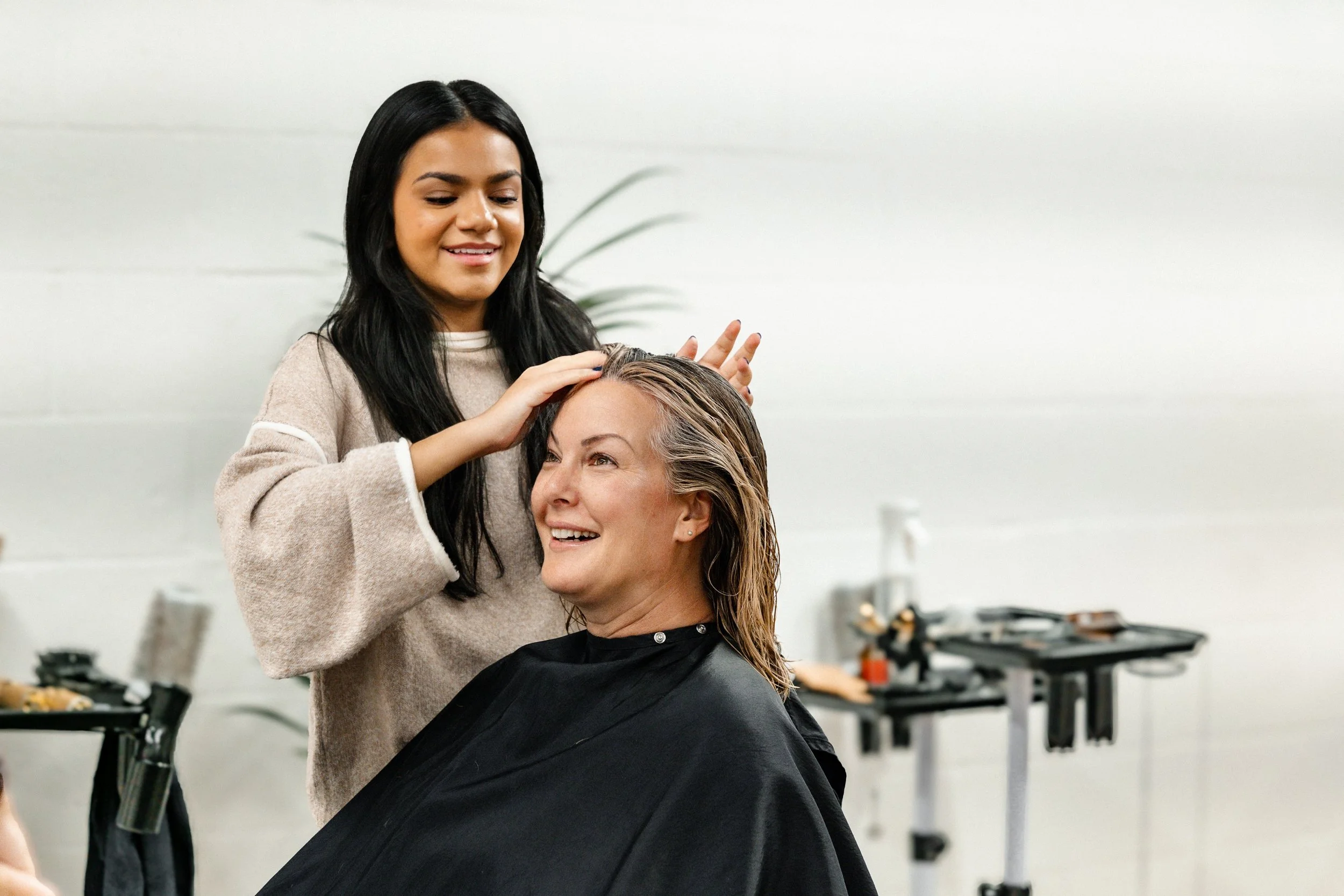
If you feel like you are back in the color chair every three weeks fighting a line of gray at your part, there is another way to do this. Gray blending softens the transition between your grays and your natural color instead of painting over all of it, so the grow-out is gentle and your visits stretch further apart. It is one of the fastest-growing requests in our color work at WHITEFOX, and for good reason.
The short version: full coverage hides gray, gray blending works with it. One creates a hard root line every few weeks. The other grows out soft.
What gray blending actually is
Gray blending uses highlights, lowlights, and a tailored gloss to weave your grays into a dimensional color, rather than depositing one solid shade over everything. Instead of a sharp line where new gray growth meets colored hair, you get a soft, lived-in blend that reads as intentional dimension. The grays are still there. They are just doing something flattering instead of announcing themselves at the part.
This is the difference between coloring to erase and coloring to design. We are not pretending the gray does not exist. We are placing it.
Why women are moving away from full coverage
Full, single-process coverage has one real drawback: the grow-out. Because it is a solid color, the moment new gray grows in, you get an obvious line, usually within two to three weeks. That is what puts so many women on the every-three-week treadmill, and it is exhausting and expensive.
Gray blending breaks that cycle. Because the color is dimensional and the grays are woven in, there is no single line to chase. Most of our blending guests go eight to twelve weeks between appointments instead of three or four. You spend less time in the chair, less money over the year, and you stop planning your life around your roots.
There is a quieter reason too. Many women reach a point where they no longer want to hide the gray completely, but they are not ready to go fully silver either. Blending is the honest middle ground, and it tends to look more natural than solid dye on skin that has also changed over the years.
Who gray blending suits best
Blending works beautifully if your gray is somewhere between a first few strands and roughly half your head, and if you want lower maintenance without a dramatic change. It is especially flattering on women transitioning toward embracing their natural silver, because it eases the line rather than forcing a hard grow-out phase.
It is a weaker fit if you are almost entirely gray and want full, even coverage, or if you love a single rich solid shade and do not mind the upkeep. In those cases full coverage or a full silver transition may serve you better. The honest answer depends on how much gray you have, your natural depth, and how much maintenance you actually want, which is exactly what a color consultation sorts out. If you are also weighing which tones flatter your skin, our guide on color analysis for your skin tone is a useful companion read.
What to expect at your appointment

A blending appointment starts with a real conversation about your gray, your natural color, your lifestyle, and how often you can realistically get to the salon. From there your stylist designs the placement, weaves the highlights and lowlights through the gray, and finishes with a gloss to marry the tones. You leave with the color and a maintenance plan built around stretching your visits, which is the whole point of a tailored color plan.
Between appointments, a good gloss-refreshing shampoo and the right at-home care keep the blend fresh, so the color looks deliberate all the way to your next visit rather than only the first two weeks.
Frequently asked questions
What is the difference between gray blending and full coverage? Full coverage deposits one solid shade over all your hair, including the gray, which creates a hard root line as new gray grows in. Gray blending weaves highlights and lowlights through the gray for a dimensional, soft grow-out with no single line to chase.
How long does gray blending last? Most guests stretch eight to twelve weeks between appointments, compared with three to four for solid coverage, because there is no hard regrowth line.
Is gray blending good for a lot of gray? It works best from a few strands up to about half gray. If you are almost entirely gray and want full even coverage, traditional coverage or a full silver transition may suit you better. A consultation is the honest way to decide.
Will gray blending grow out looking bad? That is the main advantage. Because the color is dimensional and blended, there is no sharp line, so it grows out softly and stays looking intentional much longer than solid dye.
Can I switch to gray blending from full coverage? Usually yes, though it can take a session or two to soften a solid base into a blended, dimensional result. Your stylist will map the transition at your consultation.
If chasing your roots every few weeks has stopped feeling worth it, there is a calmer way to wear your color. When you are ready to design it, become a WHITEFOX Guest or call us at (806) 236-6047.
