

If you have curly hair, you have probably had this happen: the cut looked fine in the chair while your hair was wet and straight, then it dried and sprang up two inches shorter on one side than the other.
That is the problem dry cutting solves. Instead of cutting wet hair pulled straight, your stylist cuts your hair dry, in its natural pattern, the way you actually wear it.
For curls, coils and most textured hair, it is often the difference between a cut that works and one you spend six weeks growing out. You can see all our options on our cuts and styling page.
What is a dry haircut?
A dry haircut is exactly what it sounds like. The hair is cut while it is dry and styled as you normally wear it, rather than wet and combed flat.
For curly hair, stylists often cut curl by curl or section by section, shaping each one where it naturally falls. For wavy or thick hair, a dry cut lets the stylist see where bulk and weight really sit and remove it in the right places.
Why dry cutting works for curly hair
Shrinkage. Curls can shrink a lot from wet to dry, and not evenly. Two curls next to each other can spring up by very different amounts. Cutting wet means guessing at that shrinkage. Cutting dry means there is nothing to guess.
Every curl is different. Most heads of curly hair have more than one pattern. Tighter at the nape, looser around the face, a stubborn section at the crown. A dry cut lets the stylist shape each area for how it actually behaves.
You see the shape as it happens. With a dry cut, you can watch the final shape take form. There is no surprise when your hair dries at home.
Better balance and volume. Curly hair tends to build into a triangle when weight sits at the bottom. Cutting dry makes it easier to remove weight in the right spots so the shape stays rounded and full instead.
Is a dry cut only for curly hair?
No. Dry cutting can also help with:
Thick hair with a lot of bulk.
Wavy hair that sits differently on different days.
Hair with cowlicks or strong growth patterns.
Textured styles where movement matters more than a perfectly straight line.
And to be honest about the other side: some cuts are easier to do precisely on wet hair. A very blunt, sharp bob on fine, straight hair is often cut wet and then refined dry. Your stylist will tell you which approach suits your hair and the shape you want. Our guide to choosing a cut for your face shape can help you decide what shape to ask for.
Dry cutting at WHITEFOX
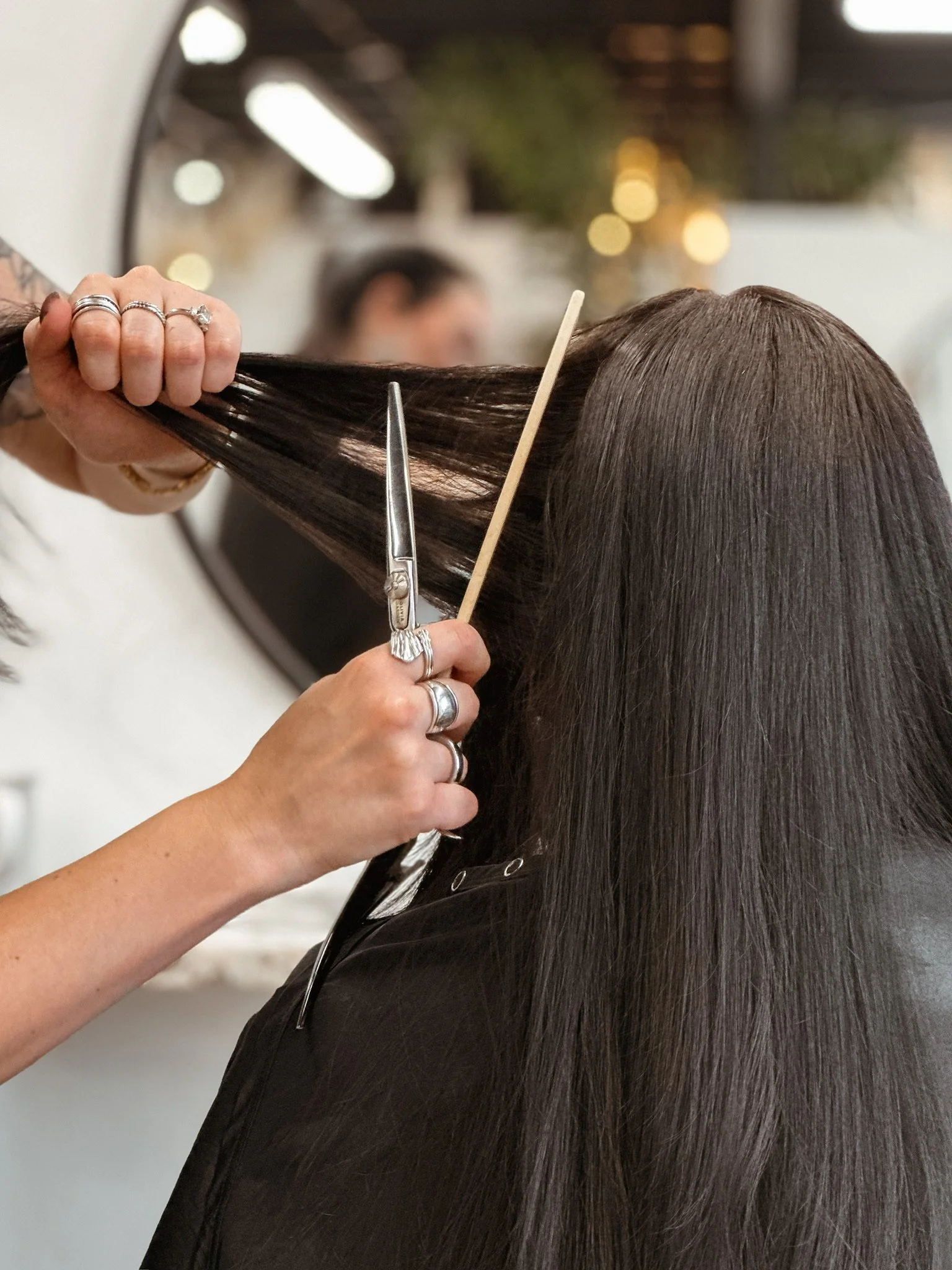
We offer a Dry Cut and Style for guests who want a cut on dry hair without a wash, conditioning treatment or blowdry. It is a good fit if your curls are freshly washed and styled the way you like them, and you want the cut to work with that.
If you would like your curls cleansed and styled after your cut, ask about pairing it with a Cleanse and Diffuse, one of our blowout services. Diffusing dries curls with gentle, spread-out airflow so they set in their natural pattern with less frizz. It is also a good way to learn what your curls can do when they are styled well.
When you reserve, mention that you have curly or textured hair and want a dry cut, so we can match you with the right stylist. Reserve your dry cut here.
How to come in for a dry cut
A little preparation makes a big difference:
Wear your hair down and natural. Come in with your curls styled the way you usually wear them, not straightened, braided or in a bun.
Come in with clean hair. Wash and style a day or so before, so your curls are defined but not weighed down.
Go light on product. Heavy gels and oils hide your natural pattern. Use your usual leave-in, but skip anything extra.
Bring your routine. Tell your stylist what products you use and how you dry your hair. It changes how they cut.
Bring photos of curls, not straight hair. Inspiration photos of curly cuts on hair like yours are much more useful than a straight-hair photo.
Keeping a curly cut in shape
Curly cuts usually hold their shape a little longer than straight cuts, because small differences in length are harder to see. Many people with curly hair come back every eight to twelve weeks, sooner if they are growing out damage or changing shape. The haircut guide covers timing for every type of cut.
Healthy curls also start at the scalp. Amarillo's dry air and hard water can leave curls rough and undefined, and buildup weighs them down. A scalp treatment clears that buildup so curls can form properly.
We don't rush. We design.
Frequently asked questions
What is a dry haircut?
A haircut done on dry hair, styled the way you normally wear it, instead of on wet hair combed straight. It lets the stylist see the real shape and shrinkage as they cut.
Is dry cutting better for curly hair?
For most curly and coily hair, yes. Curls shrink unevenly as they dry, and cutting dry removes the guesswork, so the shape you see in the chair is the shape you get at home.
Should I wash my hair before a dry cut?
Yes, a day or so before. Come in with clean, dry hair styled the way you usually wear it, with light product.
Can straight hair be dry cut?
Yes. Dry cutting can help with thick, wavy or cowlick-prone straight hair. Some very precise blunt shapes are easier to start wet, and your stylist will tell you which suits your hair.
How often should curly hair be cut?
Every eight to twelve weeks for most curly hair, or sooner if you are changing shape or removing damage.
Your curls deserve a cut that respects how they actually grow. Become a WHITEFOX Guest and tell us about your curl pattern, or call (806) 236-6047 and we will match you with the right stylist.
